Perineoplasty: Repairing the Vaginal Opening After Childbirth
Introduction
One of the most life-changing events for a woman is giving birth. Although it is incredibly fulfilling and joyful, it can also alter the body physically, especially in the perineal and vaginal regions. The tissues surrounding the vaginal opening expand considerably and can rip during vaginal birth. Sometimes these tissues don’t heal as well as they should, which results in pain, looseness, or scarring.
Cosmetic gynecologist and PCOS specialist Dr. Shraddha Goel claims that contemporary cosmetic gynecology techniques now provide practical ways to assist women in regaining their confidence and function following childbirth. Perineoplasty, a specialist surgical surgery that focuses on vaginal opening repairing and reconstructing the perineal area, is one such cutting-edge treatment.
Women who wish to treat problems including perineal rips, loose vaginal opening, discomfort during intimacy, or aesthetic concerns are increasingly choosing perineoplasty after childbirth. You will learn about the perineoplasty surgery, its advantages, the healing process, and who might profit from it from this blog.
What is Perineoplasty?
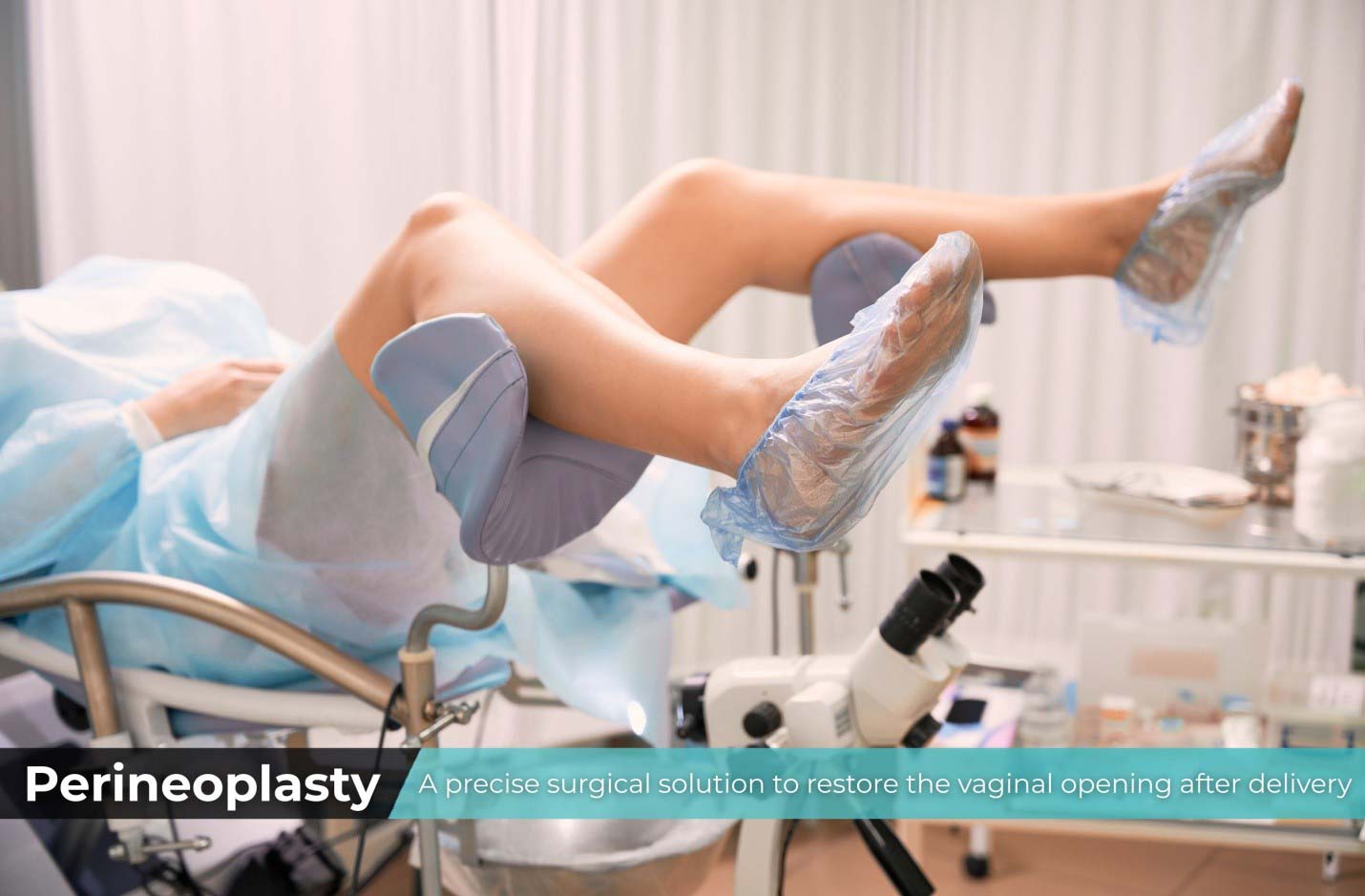
The purpose of perineoplasty, a reconstructive and cosmetic surgical surgery, is to tighten and restore the perineum, the region between the anus and the vaginal entrance.
The pressure of labor can cause the perineum to stretch or rip during vaginal delivery. Deeper injuries might result in issues including a wider vaginal opening, scar tissue, or weakened muscles, although tiny tears heal on their own. By strengthening the muscles surrounding the vaginal opening and mending damaged tissues, perineoplasty surgery aids in the restoration of the perineum’s structure.
In order to restore normal anatomy and comfort, this technique is frequently advised for women who need vaginal repair after delivery or perineal tear repair after childbirth.
Perineoplasty after childbirth, frequently helps women restore improved muscular tone and support by vagina tightening.
Understanding the Perineum and Its Importance
Supporting the pelvic floor muscles and preserving the shape of the vaginal opening, the perineum is a crucial component of female anatomy.
Functions of the Perineum
- Supports the muscles of the pelvic floor
- Helps maintain vaginal tightness
- Protects internal pelvic organs
- Enhances the ease and satisfaction of sexual relations
- Improves bladder and bowel control
In order to restore appropriate structure and function, damage to this area during childbirth may require postpartum vaginal repair or perineal tear repair.
Why Do Women Need Perineoplasty After Childbirth?
After giving birth, many women heal on their own, but some may have long-lasting alterations that call for medical care. When the perineum or vaginal opening does not heal properly after childbirth, perineoplasty is advised.
Common Reasons for Perineoplasty
- Severe Perineal Tears
The perineum may spontaneously tear during vaginal birth. Muscles and tissues that need surgical perineal tear repair may be harmed by severe tears.
- Episiotomy Complications
In order to increase the vaginal opening during birth, an episiotomy may be carried out. Sometimes the scar tissue heals inadequately and causes discomfort, necessitating vaginal repair after childbirth.
- Loose Vaginal Opening
The vaginal opening can be greatly stretched by repeated deliveries. Tightening the region and enhancing muscular tone are two benefits of perineoplasty surgery.
- Pain During Intercourse
During intercourse, discomfort may arise from improper healing, scar tissue, or expansion of the vaginal opening.
- Hygiene Concerns
Widening the vaginal aperture can occasionally lead to hygienic problems or raise the risk of infection.
In these situations, perineoplasty for vaginal opening repair aids in the restoration of both appearance and function.
Symptoms That Indicate You May Need Perineoplasty
Postpartum vaginal repair may be necessary for certain women if they have obvious symptoms.
Common Signs Include
- Sensation of the vaginal opening being loose
- Scarring that is seen in the perineum
- Uncomfortable sex
- Diminished control over muscles
- Vaginal appearance changes after delivery
- Diminished sexual fulfillment
Seeing an expert in cosmetic gynecological procedures can help assess whether perineoplasty surgery is the best course of action if these symptoms interfere with everyday living or self-esteem.
How Perineoplasty Surgery is Performed
A skilled cosmetic gynecologist will typically conduct a small treatment called a perineoplasty. Its main goals include vaginal tightening, opening and rebuilding the perineum.
Step-by-Step Perineoplasty Procedure
1. Medical Evaluation
The physician assesses the patient’s symptoms, history of childbirth, and perineal tissue health.
2. Removal of Scar Tissue
Tissues from childbirth that are damaged or scarred are carefully removed.
3. Muscle Repair
To regain strength and support, the perineum’s underlying muscles are strengthened and rebuilt.
4. Vaginal Opening Repair
The method of the vaginal opening repair involves tightening and reshaping the entrance.
5. Suturing
The surgical site is sealed with dissolvable stitches to promote natural healing.
Patients can frequently return home the same day after the perineoplasty procedure, which typically takes 30 to 60 minutes.
Benefits of Perineoplasty
For women going through postpartum changes, perineoplasty provides a number of medicinal and cosmetic advantages.
Physical Benefits
- Effective perineal tear repair
- Improved vaginal tightening after childbirth
- Restoration of the structure of the vaginal opening
- Decrease in discomfort associated with scars
- Improved pelvic support and hygiene
Emotional and Psychological Benefits
- Increased self-assurance
- Increased comfort when having intimate moments
- A positive perception of one’s body
- Improved living quality
After giving delivery, many women claim that perineoplasty surgery greatly increases their comfort and confidence.
Perineoplasty vs. Vaginal Rejuvenation Surgery
Perineoplasty and other vaginal rejuvenation surgery procedures are sometimes confused by women. They both seek to enhance vaginal health, but they focus on distinct aspects.
Perineoplasty
- Focuses on vaginal opening repair
- Repairs rips caused by childbirth and the perineum
- Treats scar tissue and an enlarged vaginal opening
Vaginal Rejuvenation Surgery
- Focuses on making the entire vaginal canal tighter
- May involve laser treatments or operations like vaginoplasty
- Enhances the tone of the interior vaginal muscles
To get the greatest results, perineoplasty may occasionally be combined with other cosmetic gynecological procedures.
Recovery After Perineoplasty
After perineoplasty surgery, recovery is typically easy and quick.
Immediate Recovery
After the procedure, the majority of patients are released the same day.
Common Temporary Symptoms
- Mild swelling
- Slight discomfort
- Tenderness around the surgical area
Usually, these symptoms go away in 7 to 10 days.
Recovery Tips
- Steer clear of heavy lifting for 2–3 weeks
- Keep yourself clean
- Steer clear of sexual activity for 4–6 weeks
- Observe your doctor’s prescription recommendations
- Keep your follow-up appointments
After perineoplasty after childbirth, most women return to their regular activities within a week.
Who is the Ideal Candidate for Perineoplasty?
Perineoplasty surgery may be beneficial for women who:
- Have endured severe tears during giving birth
- Need perineal tear repair
- After giving birth, notice that their vaginal aperture has expanded
- Feel pain as a result of scar tissue
- Want vaginal tightening after childbirth
- Need vaginal repair after delivery for practical or cosmetic reasons
Women who intend to become pregnant in the future, however, could be advised to put off the operation.
Is Perineoplasty Safe?
Yes, when carried out by a skilled cosmetic gynecologist, perineoplasty surgery is regarded as a safe and successful technique.
Possible Risks (Rare)
- Mild infection
- Temporary swelling
- Minor discomfort
- Delayed healing
Selecting a qualified physician who specializes in cosmetic gynecological procedures guarantees safe care and the best possible outcomes.
When Should You Consult a Cosmetic Gynecologist?
A expert should be consulted if you observe:
- After giving delivery, ongoing discomfort
- Perineal injury that is visible
- Intimacy-related pain
- Modifications to the vaginal opening
- Postpartum vaginal repair symptoms
Determining whether perineoplasty, vaginal rejuvenation surgery, or other therapies are appropriate for your condition requires early consultation.
Final Thoughts
A woman’s body may change in a number of ways after giving birth, particularly in the vaginal and perineal regions. Some women may require medical intervention to regain normal structure and comfort, even though many of these modifications heal on their own.
For women who require vaginal opening repair, perineal tear repair, or vaginal repair after delivery, perineoplasty after childbirth provides a safe and efficient option. The process strengthens muscles, repairs damaged tissues, and enhances vaginal health in general.
Women now have access to therapies that improve their physical health and self-esteem thanks to developments in cosmetic gynecological procedures. Perineoplasty surgery can restore women’s comfort, self-esteem, and quality of life after childbirth when carried out by a skilled specialist.